Your brand has roughly 50 milliseconds to make a first impression. That’s it. Before a customer reads a single word of your copy, they’ve already formed an opinion based on what they see—your colors, your typography, your imagery, your overall aesthetic. This is why visual creative design sits at the heart of every memorable brand.
Strong brands aren’t built by accident. They’re the result of intentional choices about how a company looks, feels, and communicates across every touchpoint. From the logo on your homepage to the motion graphics in your social ads, each visual element either strengthens your brand or chips away at it.
In this post, we’ll explore how a thoughtful approach to visual creative design can transform a forgettable brand into one that people recognize, trust, and choose. You’ll learn the core principles that guide effective design strategy, how digital creative design shapes customer perception, and practical steps to build a visual identity that lasts.
Why Visual Creative Design Matters for Brand Building
 People process images far faster than text. Our brains can identify a familiar visual cue in a fraction of a second, which is exactly why brands invest so heavily in their visual identity. A consistent look helps customers recognize you instantly, whether they spot your product on a crowded shelf or scroll past your post in a busy feed.
But recognition is only part of the story. Visual creative design also builds emotional connections. The right color palette can convey trust, energy, luxury, or playfulness. Thoughtful typography can make you feel approachable or authoritative. When these elements work together, they tell a story about who you are—often before you say a word.
Consider how design influences buying decisions. A polished, cohesive visual presence signals professionalism and reliability. A messy, inconsistent one raises doubts. Customers may not consciously articulate why they trust one brand over another, but design is frequently the deciding factor.
The Core Elements of a Strong Visual Identity
A great visual identity isn’t a single logo or a clever tagline. It’s a system of connected elements that work together to create a unified impression. Let’s break down the building blocks.
Color Palette
Color is one of the most powerful tools in your design arsenal. Each shade carries meaning and triggers emotional responses. Blue often suggests trust and stability, which is why so many financial and tech companies use it. Red can spark urgency or excitement. Green tends to evoke health, growth, or sustainability.
Choosing a palette isn’t about picking your favorite colors. It’s about selecting shades that reflect your brand’s personality and resonate with your audience. Once you’ve chosen your colors, use them consistently across every platform.
Typography
Fonts speak volumes. A sleek, modern typeface communicates something very different from a classic serif or a playful handwritten style. Your typography should match your brand’s tone and remain legible across screens and print.
Limit yourself to two or three fonts to maintain consistency. Mixing too many typefaces creates visual chaos and dilutes your identity.
Logo and Visual Marks
Your logo is the cornerstone of your visual identity. It needs to work at every size, from a tiny app icon to a large billboard. The best logos are simple, memorable, and flexible enough to adapt across different contexts without losing their essence.
Imagery and Graphics
The photos, illustrations, and graphics you use shape how people perceive your brand. A consistent style—whether that’s bright and minimal or moody and textured—reinforces your identity every time someone encounters your content.
How Digital Creative Design Shapes Customer Perception
 The digital space is where most brands live today. Your website, social media profiles, email campaigns, and online ads all carry your visual identity into the hands of customers. Digital creative design ensures these touchpoints feel cohesive and intentional rather than scattered.
A strong digital presence starts with consistency. When your Instagram grid, your homepage, and your email newsletter all share the same visual language, customers experience your brand as a single, trustworthy entity. Inconsistency, on the other hand, makes a brand feel disjointed and unreliable.
Digital creative design also has to account for how people actually use technology. Most web traffic now comes from mobile devices, so your visuals need to look just as sharp on a small screen as they do on a desktop. Designers must consider load times, accessibility, and how elements rearrange across different screen sizes.
Interactivity adds another layer. Animations, hover effects, and micro-interactions guide users through your digital spaces and make experiences feel alive. When done well, these touches reinforce your brand personality and keep visitors engaged.
Custom Creative Design vs. Templates: What’s Right for Your Brand?
Many brands face a choice between using templates and investing in custom creative design. Templates are affordable and fast, which makes them tempting for startups and small businesses watching their budgets. They can get you up and running quickly.
The trade-off is distinctiveness. Templates are used by thousands of other businesses, which means your brand may end up looking like everyone else. In crowded markets, blending in is a real risk.
Custom creative design solves this problem. When you build a visual identity from scratch, every element is tailored to your specific brand, audience, and goals. The result is a look that’s uniquely yours—one no competitor can replicate. Custom work also gives you the flexibility to evolve as your brand grows.
Choose templates if you’re testing an idea, working with a tight budget, or need something immediately. Invest in custom creative design if you’re building a brand for the long term and want to stand out in a competitive space. For most established businesses, the long-term value of a distinctive identity outweighs the upfront savings of a template.
The Rise of AI Motion Graphics in Brand Design
Motion is becoming a defining feature of modern brand design. Static images still matter, but movement captures attention in ways stillness can’t. This is where AI motion graphics are reshaping the creative landscape.
AI motion graphics allow brands to produce animated content faster and at lower cost than traditional methods. Tasks that once took days of manual work—animating a logo, creating a product explainer, or generating dynamic social content—can now be streamlined with AI tools. This opens the door for smaller brands to compete with larger ones that have bigger production budgets.
The appeal goes beyond efficiency. Motion graphics tell stories in compact, engaging formats that perform well on social platforms. A few seconds of well-crafted animation can explain a complex idea, showcase a product, or simply make your brand more memorable.
That said, AI is a tool, not a replacement for strategy. The brands that win with AI motion graphics are the ones that pair the technology with clear creative direction. Movement should always serve your message and reflect your visual identity, not just exist for novelty’s sake.
Building Consistency Across Every Touchpoint
Consistency is the thread that ties a strong brand together. Your customers might encounter you through a dozen different channels—your website, social media, packaging, ads, email, and more. Every one of these touchpoints should feel like it comes from the same place.
The most effective way to maintain consistency is to create a brand style guide. This document spells out exactly how your visual elements should be used: your color codes, font choices, logo placement rules, image styles, and tone. A good style guide keeps everyone on your team aligned, whether they’re designing a flyer or posting on social media.
Consistency doesn’t mean rigidity, though. Strong brands leave room for creativity within their guidelines. The framework provides structure, while the flexibility allows individual pieces to feel fresh. Think of it as a recipe that ensures the dish always tastes like your brand, even when you experiment with the presentation.
The Importance of Accessibility in Visual Creative Design
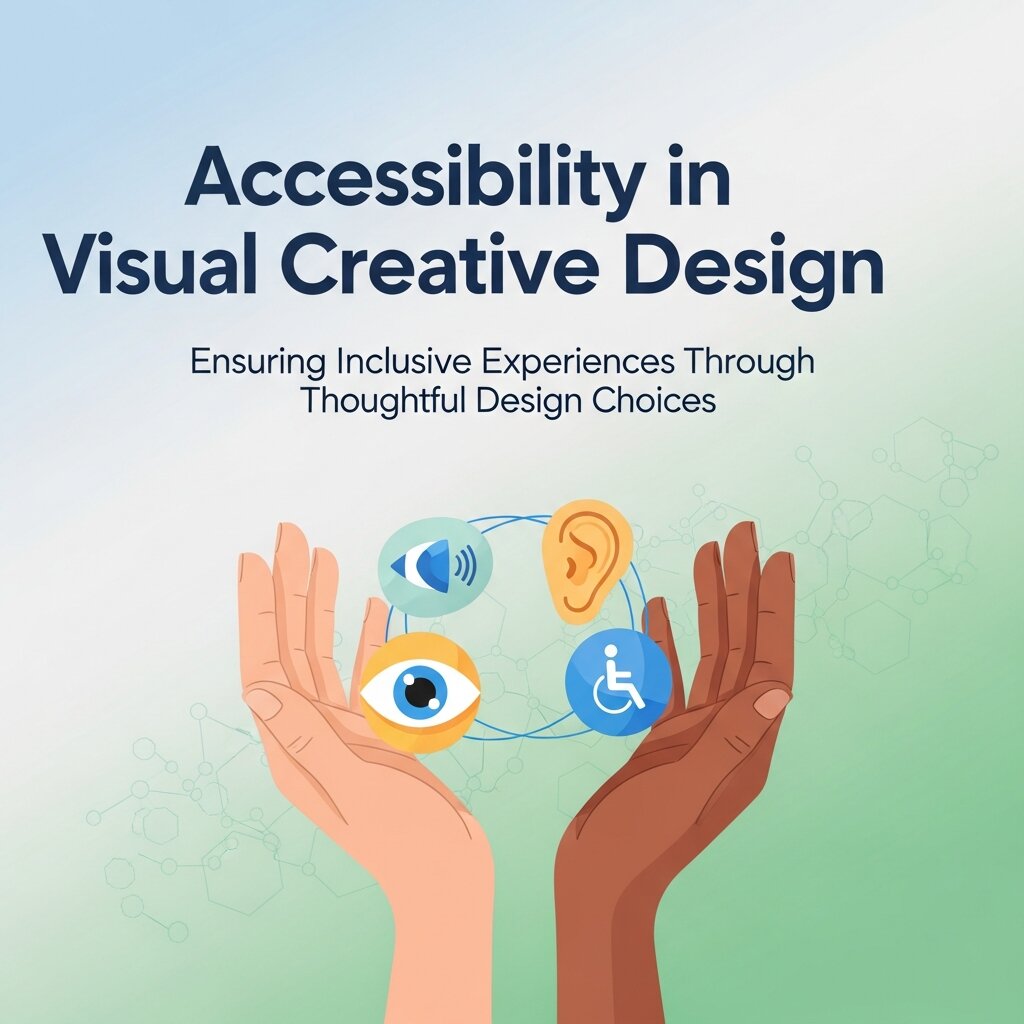 Great design isn’t just about looking good—it’s about being usable for everyone. Accessibility ensures that people with visual, cognitive, or motor impairments can interact with your brand without barriers. Features like readable font sizes, sufficient color contrast, descriptive image text, and intuitive navigation make your content more inclusive and easier to use.
Beyond inclusivity, accessible design benefits every user. Clear layouts improve readability, while thoughtful color choices make information easier to understand. Search engines also reward accessible websites, giving brands an added SEO advantage. When accessibility becomes part of your visual creative design strategy, you create experiences that are welcoming, professional, and built to reach a wider audience.
Measuring the Success of Your Visual Creative Design
Creating beautiful visuals is only half the job—you also need to know whether they’re delivering results. Measuring the performance of your visual creative design helps you understand what resonates with your audience and where improvements are needed.
Start by tracking metrics such as engagement rates, click-through rates, conversion rates, and time spent on page. Conduct A/B tests with different color schemes, layouts, or imagery to see which designs perform best. Pay attention to customer feedback as well; comments, surveys, and usability tests often reveal insights that numbers alone can’t provide. By combining creativity with data, you can refine your visual strategy continuously and turn design into a measurable business asset.
Frequently Asked Questions
1. What is visual creative design?
Visual creative design is the process of combining colors, typography, images, layouts, and graphics to communicate a brand’s message effectively. It focuses on creating visually appealing experiences that attract attention, strengthen brand identity, and encourage customer engagement.
2. Why is visual creative design important for branding?
Visual creative design helps businesses create a memorable identity and build trust with customers. Consistent visuals make brands easier to recognize, communicate professionalism, and create emotional connections that influence purchasing decisions.
3. What are the key elements of visual creative design?
The main elements include color palettes, typography, logos, imagery, graphics, layout, and spacing. Together, these components create a cohesive visual identity that reflects a brand’s personality and values.
4. How does digital creative design differ from traditional design?
Digital creative design focuses on creating visuals specifically for digital platforms such as websites, social media, email campaigns, and mobile apps. It emphasizes responsiveness, user experience, interactivity, and performance across different devices.
5. What is the difference between custom creative design and templates?
Custom creative design is built specifically for a brand’s goals and audience, making it unique and distinctive. Templates are pre-made designs that are faster and cheaper to use but may lack originality and make it harder for brands to stand out.
6. How do colors affect visual creative design?
Colors influence emotions and perceptions. Different colors can communicate trust, excitement, luxury, or creativity. Choosing and consistently using the right color palette helps reinforce brand identity and create stronger emotional connections with customers.
7. What role does typography play in visual creative design?
Typography affects readability, brand personality, and overall user experience. The right fonts help communicate a brand’s tone, create visual hierarchy, and ensure content is easy to read across both digital and print platforms.
8. How are AI motion graphics changing brand design?
AI motion graphics allow brands to create animated content faster and more efficiently. They help businesses produce engaging videos, social media animations, and dynamic visual content while reducing production time and costs.
9. How can businesses maintain consistency in their visual identity?
Businesses can maintain consistency by creating a brand style guide that defines colors, fonts, logo usage, imagery styles, and design rules. Following these guidelines across all channels ensures a unified and professional brand image.
10. How can I improve my visual creative design skills?
You can improve your visual creative design skills by studying successful brands, learning design principles, practicing regularly, experimenting with new tools, and analyzing audience feedback. Continuous learning and testing help develop stronger and more effective design strategies.
Turning Design Strategy Into Long-Term Brand Value
Visual creative design is not a one-time project. It’s an ongoing investment that pays dividends as your brand grows. The brands that endure are the ones that treat design as a strategic priority rather than an afterthought.
Start by auditing your current visual identity. Ask yourself whether your colors, typography, imagery, and digital presence truly reflect who you are and who you want to reach. Look for inconsistencies and gaps, then build a plan to address them.