The creative industry is famous for its confusing job titles. If you spend time browsing job boards or reading industry blogs, you will likely see overlapping terms used to describe completely different roles. Two of the most commonly confused titles are graphic designer and visual designer. At a glance, they might seem identical. Both involve creating beautiful visuals, mastering typography, and understanding color theory.
However, beneath the surface, these two career paths diverge significantly. They focus on different media, require distinct skill sets, and serve different purposes within a business. A graphic designer might spend their day finalizing a print layout for a magazine, while a visual designer works on establishing the look and feel of a new mobile application. Understanding these nuances is essential for anyone looking to build a career in the creative sector.
This guide explores the great debate of graphic design vs visual design. We will outline the exact definitions of both fields, highlight the core differences in their day-to-day responsibilities, and examine the unique skills required for each. By the end of this post, you will have a clear understanding of which career path best aligns with your personal strengths and professional goals.
The Basics: Defining the Two Fields
Before comparing the two professions, we need to establish exactly what each role entails. Both require a sharp eye for aesthetics, but their fundamental goals shape how they approach their work.
What is Graphic Design?
 Graphic design is the practice of combining text, imagery, and color to communicate a specific message to an audience. It has deep historical roots, dating back to the invention of the printing press. For decades, graphic designers focused almost exclusively on physical media. They created posters, brochures, magazines, packaging, and billboards.
Today, the role has expanded to include static digital assets like social media graphics and email banners. The primary goal of a graphic designer is to convey a concept or idea clearly and effectively. They use creative designs to capture attention, inform the public, or persuade a consumer to make a purchase.
What is Visual Design?
 Visual design was born out of the digital age. It focuses on the aesthetics of a product and its related materials by strategically implementing images, colors, fonts, and other elements. While graphic design communicates a specific message, visual design focuses on crafting a cohesive brand experience across digital platforms.
A visual designer looks at the big picture. They are responsible for how a website, application, or software interface looks and feels to the user. Their work ensures that digital platforms are not only beautiful but also intuitive and engaging. They bridge the gap between pure graphic design and user interface (UI) design, ensuring that every digital touchpoint aligns with the broader brand identity.
Graphic Design vs Visual Design: Core Differences
The easiest way to understand the difference between these two roles is to look at their deliverables, the medium they work in, and their approach to problem-solving.
Medium and Platforms
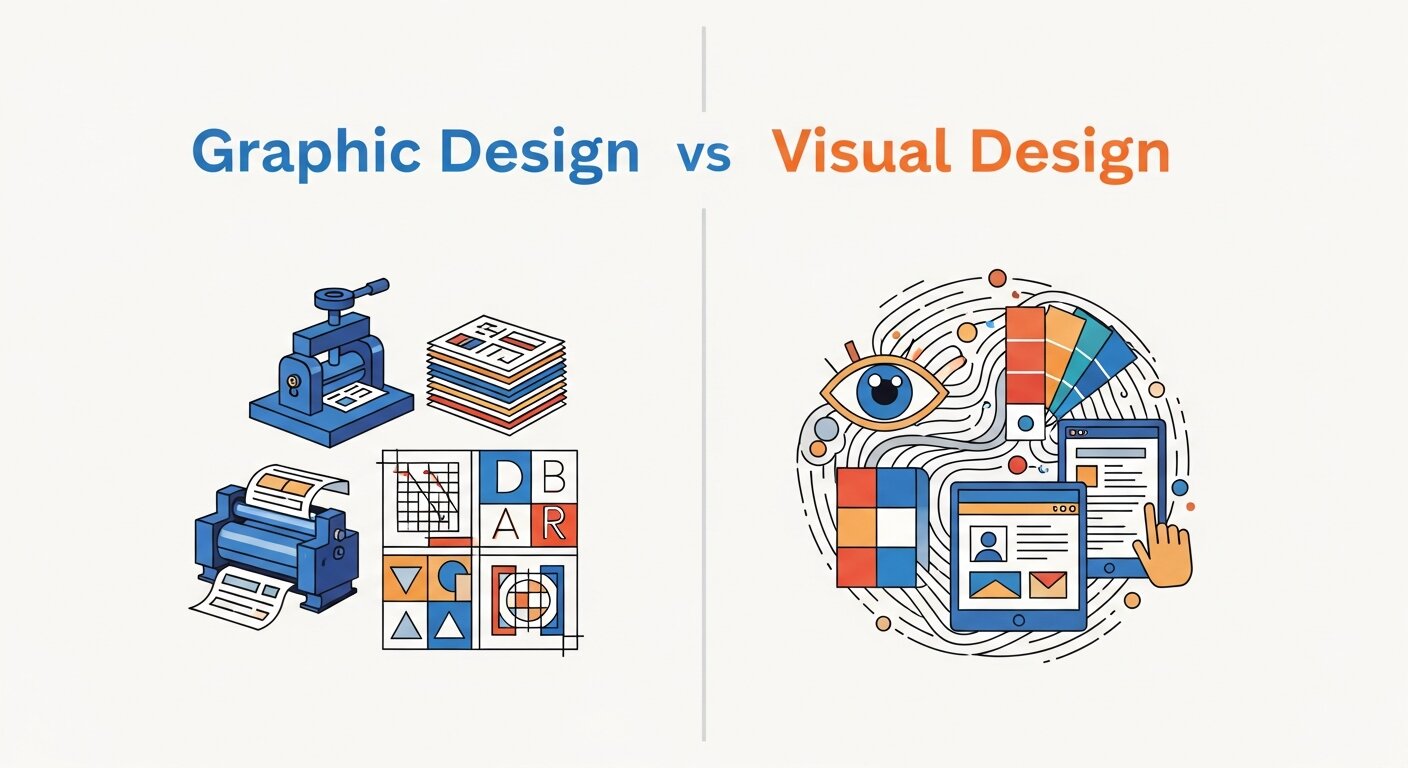
The most obvious distinction lies in the medium. Graphic designers frequently work with print. They understand physical dimensions, bleed margins, and color profiles like CMYK. When a company needs a physical product package or a trade show banner, they call a graphic designer. Even when graphic designers create digital assets, those assets are usually static.
Visual designers live entirely in the digital world. Their work appears on screens of all sizes, from desktop monitors to smartwatches. Because they design for digital interfaces, they must consider responsive design. A visual designer knows that their layout will change based on the device the user is holding. They work with RGB color profiles, screen resolutions, and digital accessibility standards.
Scope of Work and Project Lifecycles
A graphic designer typically works on specific, standalone projects. A client might ask for a logo, a flyer, or a set of business cards. Once the final files are handed over and printed, the project is complete. The graphic designer moves on to the next task.
Visual design involves a more continuous, iterative process. A website or an app is never truly finished. Visual designers constantly tweak and update digital assets based on user feedback, software updates, and changing brand guidelines. They maintain design systems and style guides to ensure every new digital feature matches the existing platform.
The Role of User Interaction
Graphic design is a one-way street. The audience looks at a poster or reads a magazine, but they do not physically interact with the design itself. The success of the design relies on catching the eye and delivering a message quickly.
Visual design is highly interactive. Users click buttons, scroll through pages, and swipe across galleries. A visual designer must account for how a user navigates through a digital space. They consider the placement of call-to-action buttons, the visual hierarchy of a webpage, and how hover states or animations impact the overall experience.
Key Skills Required for Each Role
Both roles require a foundational understanding of art and design principles. However, the specific skills you need to develop will change depending on which path you take.
The Graphic Designer Skill Set
Graphic designers must master traditional design concepts. Their skill set revolves around creating perfect static layouts.
- Typography: Understanding how to pair fonts, adjust kerning, and make text highly readable on paper.
- Print Production: Knowing the difference between paper weights, finishes, and printing techniques.
- Branding: Translating a company’s core values into a visual identity, including logo design and brand guidelines.
- Illustration: Many graphic designers create custom illustrations or manipulate photos to tell a story.
- Color Theory: Applying color psychology to evoke specific emotions from the viewer.
The Visual Designer Skill Set
Visual designers build upon the basics of graphic design but apply them to digital environments. Their skills are closely tied to technology and user behavior.
- User Interface (UI) Design: Creating intuitive and attractive digital layouts that guide the user through an app or website.
- Responsive Design: Ensuring that visual elements scale and adapt flawlessly across desktop, tablet, and mobile screens.
- Wireframing and Prototyping: Mapping out the skeletal structure of a digital product before adding the final creative designs.
- Basic Coding Knowledge: While they rarely write code themselves, understanding HTML and CSS helps visual designers communicate better with software developers.
- Interaction Design: Planning how design elements respond when a user interacts with them, such as button animations or loading screens.
Tools of the Trade
 The software you use daily will also depend heavily on your chosen career path. While there is some overlap, the industry standard tools for each profession are distinct.
Software for Graphic Designers
Graphic designers rely heavily on the Adobe Creative Cloud. These tools are built for complex photo manipulation, vector graphics, and print layouts.
- Adobe Illustrator: The industry standard for creating scalable vector artwork, logos, and custom typography.
- Adobe Photoshop: Used for photo editing, digital painting, and complex image compositing.
- Adobe InDesign: The go-to software for multi-page document layouts, such as magazines, brochures, and eBooks.
Software for Visual Designers
Visual designers need tools that support web and app design, prototyping, and developer handoffs.
- Figma: A collaborative, cloud-based design tool that allows multiple designers to work on digital interfaces simultaneously.
- Sketch: A popular macOS application used exclusively for UI and digital design.
- Adobe XD: Adobe’s answer to UI/UX design, used for creating wireframes and interactive prototypes.
- InVision: A platform used to turn static designs into clickable prototypes, making it easy to share concepts with stakeholders.
Career Paths and Opportunities
Choosing between graphic design vs visual design will shape your long-term career trajectory. Both fields offer excellent opportunities, but they lead to different senior roles.
Graphic Design Career Trajectory
Many graphic designers start their careers working at creative agencies or as part of an in-house marketing team. A typical career path might begin as a Junior Graphic Designer, where you spend your time assisting with layouts and resizing images.
As you gain experience, you can move into a Mid-level or Senior Graphic Designer role, taking ownership of major campaigns and branding projects. From there, you might step into an Art Director position. Art Directors manage teams of designers, photographers, and copywriters to ensure a cohesive creative vision across all marketing materials. Some graphic designers also choose the freelance route, building their own client base and specializing in niche areas like packaging or logo design.
Visual Design Career Trajectory
Visual designers often work within product teams, tech startups, or specialized digital agencies. You might start as a Junior Visual Designer, helping to build out digital assets or maintain a company’s design system.
Progression in this field often leads to titles like UI Designer or Product Designer. Product Designers take on a more holistic role, blending visual design with user experience (UX) research and business strategy. Eventually, a successful visual designer can become a Creative Director or a Design Lead, overseeing the entire digital presence of a major tech brand.
Salary Expectations and Job Market
Financial expectations play a major role in choosing a career. The salaries in these fields can vary based on your location, experience level, and the specific industry you work in.
Graphic Design Outlook
Graphic design is an established field with a massive global talent pool. Because graphic designers are needed in almost every industry—from local restaurants to international retail brands—jobs are plentiful.
However, because the barrier to entry is relatively low, junior roles can be highly competitive. According to standard industry data, graphic designers typically earn a solid, stable income, with Senior Graphic Designers and Art Directors commanding significantly higher salaries. Those who specialize in high-demand niches, such as motion graphics or complex packaging, often see higher earning potential.
Visual Design Outlook
Visual design is a rapidly growing field fueled by the booming tech industry. As more companies shift their focus entirely to digital products, the demand for skilled visual designers continues to climb.
Because visual design requires technical knowledge of UI principles and responsive layouts, the average starting salary tends to be slightly higher than that of traditional graphic design. Roles in the tech sector, especially Product Design and UX/UI design, offer some of the most lucrative compensation packages in the creative industry.
Frequently Asked Questions (FAQ)
What is the main difference between graphic design and visual design?
The core difference lies in purpose and medium. Graphic design focuses on creating static visuals—often for print or simple digital use—to communicate a clear message. Visual design, on the other hand, focuses on the overall look and feel of digital products like websites and apps. It ensures consistency, usability, and aesthetic harmony across interactive platforms.
Which career is better: graphic design or visual design?
Neither is universally “better”—it depends on your interests. If you enjoy working on print materials, branding, and standalone visuals, graphic design is a great fit. If you prefer digital environments, user interfaces, and interactive experiences, visual design offers more opportunities, especially in the tech industry.
Do I need coding skills for visual design?
Basic coding knowledge (like HTML and CSS) is helpful but not always required. It allows visual designers to collaborate better with developers and understand how designs are implemented. However, the primary focus remains on design, not programming.
Is graphic design easier than visual design?
Not necessarily. Graphic design focuses more on traditional design principles and print production, while visual design involves digital systems, responsiveness, and user interaction. Each has its own challenges, and difficulty depends on your strengths and interests.
What tools do graphic and visual designers use?
Graphic designers commonly use tools like Adobe Illustrator, Photoshop, and InDesign for print and static designs. Visual designers rely on tools like Figma, Sketch, Adobe XD, and InVision for digital interfaces, prototyping, and collaboration.
Can a graphic designer become a visual designer?
Yes, transitioning is very possible. A graphic designer can move into visual design by learning UI/UX principles, responsive design, and modern design tools. Since both roles share foundational design skills, the shift is often smooth with the right upskilling.
Which field has better salary potential?
Visual design generally offers higher earning potential, especially in tech-related roles like UI/UX or product design. However, experienced graphic designers—especially those specializing in branding or motion graphics—can also earn competitive salaries.
Is visual design only for websites and apps?
Mostly yes. Visual design is heavily focused on digital products, including websites, mobile apps, dashboards, and software interfaces. It ensures that all visual elements work together to create a seamless and engaging user experience.
Making Your Final Decision
Deciding between graphic design vs visual design comes down to understanding how you prefer to work.
If you love typography, print production, and creating standalone visual concepts, graphic design is likely the better fit. It offers a tangible connection to your work and allows you to craft specific, impactful messages through traditional creative designs.